

Gorillas draw most of the attention in East Africa, but chimpanzees offer a very different kind of wildlife encounter. They are faster, noisier and more unpredictable, and they share about 98 percent of our DNA. Watching a chimpanzee community feed, call, groom and squabble in the canopy feels uncomfortably familiar, and it is one of the most engaging primate experiences you can have.
Rwanda and Uganda are the two best countries in the region for chimpanzee trekking. This guide compares the main destinations, explains what to expect, outlines costs, and shows how to combine chimps with gorillas in one trip.
Why Trek Chimpanzees?
Lower cost than gorillas. Chimpanzee permits are priced at a fraction of gorilla permits, so they make an excellent addition to a primate itinerary or a standalone trip for travellers with smaller budgets.
A different pace. Gorillas are calm and slow. Chimpanzees are energetic, vocal and constantly on the move. Treks often involve fast changes of direction, sudden bursts of calling and fleeting views high in the trees.
Rich forest scenery. The forests that shelter chimpanzees also hold monkeys, birds, butterflies and ancient trees, so the walk itself is rewarding even when sightings are brief.
Complementary to gorillas. Many travellers pair the two. A gorilla trek delivers an intimate hour with a gentle giant, while a chimp trek delivers excitement and variety.
Chimpanzee Trekking in Uganda
Uganda has more chimpanzee sites than any other country in East Africa, giving travellers a choice of settings and budgets.
Kibale Forest National Park
Kibale, in western Uganda, is the headline destination. It is celebrated for exceptional primate density, and it is widely regarded as one of the best places in Africa to see wild chimpanzees. One operator notes that the park has three habituated chimpanzee communities, two open for standard trekking and a third reserved for habituation experiences.
Standard trekking permits are issued by the Uganda Wildlife Authority. Current 2026–2027 listings report a permit at about $250 per foreign non-resident, around $200 for foreign residents and roughly UGX 200,000 for East African citizens, although figures vary a little between sources. The standard activity allows about one hour with the chimpanzees once they are found.
The Chimpanzee Habituation Experience
Kibale also offers a longer activity for those who want more time. In the habituation experience, you join researchers and trackers as they follow a semi-habituated community through its daily routine, often for several hours. Listings for 2026–2027 give a permit price of about $300 for foreign non-residents. The extended time lets you see behaviour that a short visit may miss, including feeding strategies, social tension, grooming and long-distance calling.
This activity is popular, so book early. Some operators note that availability may be restricted in certain months, so check dates carefully.
Other Ugandan Sites
- Budongo Forest (Murchison Falls area): Offers chimpanzee tracking in a different habitat, often combined with a savannah safari.
- Kyambura Gorge (Queen Elizabeth area): A dramatic sunken forest where a small chimpanzee community lives. Sightings can be harder, but the setting is spectacular.
- Kalinzu Forest: A lower-cost option near Queen Elizabeth National Park.
- Toro-Semliki and Kyambura-style reserves: Smaller, quieter sites that add variety.
Permit prices at these sites differ from Kibale, so request current quotes.
Chimpanzee Trekking in Rwanda
Nyungwe Forest National Park
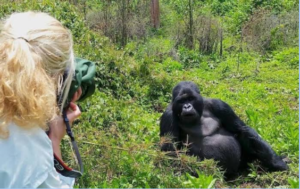
Rwanda’s main chimpanzee destination is Nyungwe Forest National Park in the southwest. It is one of Africa’s oldest and best-preserved montane rainforests, and it shelters chimpanzees, colobus monkeys, blue monkeys, hundreds of bird species and countless plants and butterflies.
Trekking here is a more strenuous experience. The terrain is steep and humid, and treks often begin before dawn so you can reach the chimpanzees at their morning feeding spots. A sighting is not guaranteed, but experienced trackers locate the community on most days.
One comparison of the two countries reports that a Nyungwe chimpanzee trek costs about $150 for the permit plus a $100 park entrance fee, giving a combined cost near $250 per person. Pricing structures change, so verify the current fee schedule with the Rwanda Development Board or your operator.
The Canopy Walk and Other Activities
Nyungwe’s canopy walkway is a suspended bridge high above the forest floor, offering a rare view of the treetops. It pairs well with a chimp trek, as do birdwatching walks, colobus monkey tracking and tea plantation visits. For travellers who want a quieter, less visited option, the Gishwati-Mukura area also offers primate activities, though facilities are more limited.
Uganda or Rwanda: Which Is Better for Chimps?
| Factor | Uganda | Rwanda |
| Main site | Kibale Forest | Nyungwe Forest |
| Number of sites | Several | One major site |
| Habituation option | Yes, in Kibale | Not widely offered |
| Typical sighting reliability | Very high at Kibale | Good, with more variable terrain |
| Cost (approximate) | $250 for a standard permit | About $250 combined permit and entry fee |
| Terrain | Moderate | Often steeper and more remote |
| Extras | Savannah parks, crater lakes | Canopy walk, tea estates |
Kibale is generally the more dependable choice for first-time chimp trekkers because of its habituation work, density of primates and well-developed infrastructure. Nyungwe is more remote and rugged, rewarding travellers who want a wilder, quieter experience, often in combination with Rwanda’s gorillas.
What a Chimpanzee Trek Is Like
Briefing. You gather at the park headquarters, usually early in the morning, for registration and a ranger briefing on rules and likely terrain.
The walk. Guides and trackers lead you through the forest. In Kibale, chimps are often found by following their calls and fresh traces. In Nyungwe, steeper slopes and denser vegetation make the walk more strenuous.
The encounter. When you find the community, the forest may suddenly erupt with pant-hoots and crashing branches. Chimpanzees may be high in fruiting trees, moving along the ground or resting in groups. Photography is challenging because of the speed and the low light.
The hour. Standard permits allow about an hour, though in practice sightings can feel shorter as the group moves. Habituation experiences stretch this to several hours.
The return. Walks back can be long, but tired legs and sweaty clothes are part of the reward.
Combining Chimps and Gorillas
Because the two animals live in different forests, combining them is a natural fit.
Rwanda route: Fly into Kigali, track gorillas in Volcanoes National Park, drive to Nyungwe for chimpanzees and finish in Kigali or at Lake Kivu. This works well for a week-long trip.
Uganda route: Land in Entebbe, trek chimpanzees in Kibale, continue to Queen Elizabeth National Park for a game drive and then trek gorillas in Bwindi. This is the classic Ugandan primate circuit.
Cross-border route: Combine Rwanda’s gorillas with Uganda’s Kibale chimps, or vice versa, using Kigali and Entebbe as gateways. This offers the most variety and gives you a direct comparison of both countries.
A sample ten-day route might include two days in Kigali and Volcanoes, a day in Nyungwe, a border crossing, a night in Bwindi and a final stop at Kibale or Queen Elizabeth before flying home from Entebbe.
Costs and Budgeting
Chimpanzee trekking is much cheaper than gorilla trekking, but it is still a premium activity.
Permits: Roughly $250 per person at Kibale, $300 for the habituation experience and around $250 combined permit and entry at Nyungwe, based on 2026 reports.
Packages: Three-day chimp packages in Kibale are advertised from several hundred dollars at the budget end to well over $1,000 or $3,000 at higher lodge levels, depending on accommodation and transport.
Other costs: Lodging, transport, meals, porters, tips, visas and insurance. If you pair chimps with gorillas, the gorilla permit will dominate your budget.
Always request an itemised quote and confirm current permit prices with the park authorities or your operator, because tariffs change between periods and some figures differ between sources.
When to Go
Chimps can be trekked all year, but conditions differ.
- Dry seasons (roughly June to September and December to February): Trails are firmer and easier, and these are the best months for comfort and reliability, though also the busiest.
- Wet seasons (roughly March to May and October to November): The forest is lush and quieter, trails are muddier and slippery, and sightings can still be excellent because the chimps often feed on fruiting trees.
Book permits well ahead for peak months, particularly for the habituation experience.
Preparing for Your Trek
- Fitness: Build stamina with hill walking and stair climbing. Nyungwe in particular can be steep.
- Clothing: Long trousers, long sleeves, sturdy hiking boots, gaiters if possible and a lightweight waterproof jacket. Muted colours help you blend in.
- Gear: Gloves, a hat, insect repellent, a small daypack, water, binoculars and a camera that performs in low light. Flash is not allowed.
- Health: See a travel clinic for vaccination and malaria advice, and carry insurance with medical evacuation.
- Rules: The minimum age is generally 12 for chimpanzee trekking, which is younger than the gorilla minimum, though you should check each site’s requirements.
Etiquette and Safety
Chimpanzees can be powerful and unpredictable, so follow rangers’ instructions closely. Keep your voice low, maintain the distance advised, avoid direct eye contact if the animals approach and never feed or touch them. Do not trek if you have a cold or other contagious illness, because chimpanzees are vulnerable to human diseases. Stay with your group and follow the path.
Conclusion
Chimpanzee trekking in Rwanda and Uganda offers an energetic, intimate and relatively affordable way to meet our closest living relatives. Uganda’s Kibale Forest is the standout for reliability and the unique habituation experience, while Rwanda’s Nyungwe delivers a wilder, steeper adventure paired with a spectacular canopy walk. Combined with gorilla trekking, they form one of the most rewarding primate itineraries on Earth. Choose your season, confirm permit prices, book early, prepare for steep and muddy terrain, and bring patience and curiosity. The forest does the rest.
Key Takeaways
- Uganda and Rwanda are the two best countries for chimpanzee trekking in East Africa.
- Kibale Forest in Uganda is the most reliable site and offers a longer habituation experience.
- Nyungwe Forest in Rwanda is steeper and more remote, with a famous canopy walk.
- Permits cost roughly $250 in Kibale and $300 for habituation, with Nyungwe at about $250 combined. Verify current rates.
- Chimp treks pair well with gorilla treks in a single itinerary.
- Dry seasons are easier, but wet seasons can also deliver excellent sightings.
- Prepare physically, wear sturdy boots, follow all health and distance rules, and book early.
Frequently Asked Questions
- Where is the best place to trek chimpanzees?
Kibale Forest National Park in Uganda is widely considered the most reliable, while Nyungwe Forest in Rwanda offers a wilder setting. - How much does chimp trekking cost?
Roughly $250 per person at Kibale and about $250 combined at Nyungwe, based on 2026 reports. The cost of living in Kibale is around $300. Confirm current prices before booking. - How long do I spend with the chimpanzees?
About one hour on a standard permit, and several hours on a habituation experience. - What is the chimpanzee habituation experience?
It is a longer activity in Kibale in which you follow a semi-habituated community with researchers and trackers over many hours. - Are sightings guaranteed?
No, but success rates are high in Kibale and good in Nyungwe. Experienced trackers locate the chimps on most days. - Is chimp trekking harder than gorilla trekking?
It can be. Chimpanzees move quickly, and Nyungwe’s terrain is steep. Kibale is generally more moderate. - What is the minimum age?
Generally around 12 for chimpanzee trekking, but check specific park rules. - When should I go?
Dry seasons are easiest, but chimpanzees can be trekked all year. - Can I combine chimps and gorillas?
Yes. Popular combinations include Volcanoes and Nyungwe in Rwanda, Kibale and Bwindi in Uganda, or a cross-border route using Kigali and Entebbe. - What should I bring?
Hiking boots, long trousers and sleeves, a waterproof jacket, gloves, insect repellent, binoculars and a camera without flash.